Our new white paper explores why growth is concentrating in smaller, experience-led events, and how hospitality operators can win that business.
NEW WHITE PAPER · AUTUMN 2026
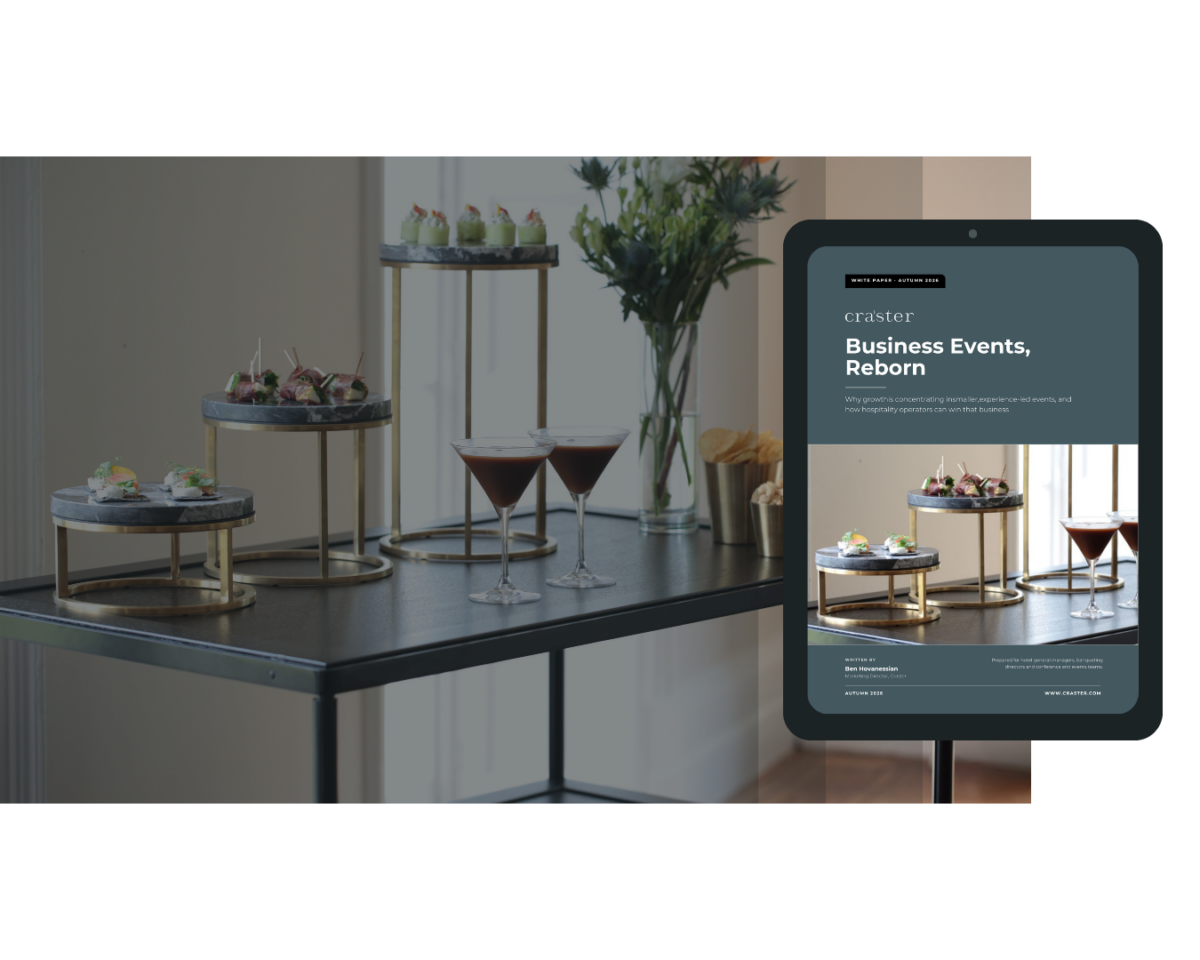
Our new white paper explores why growth is concentrating in smaller, experience-led events, and how hospitality operators can win that business.
NEW WHITE PAPER · AUTUMN 2026
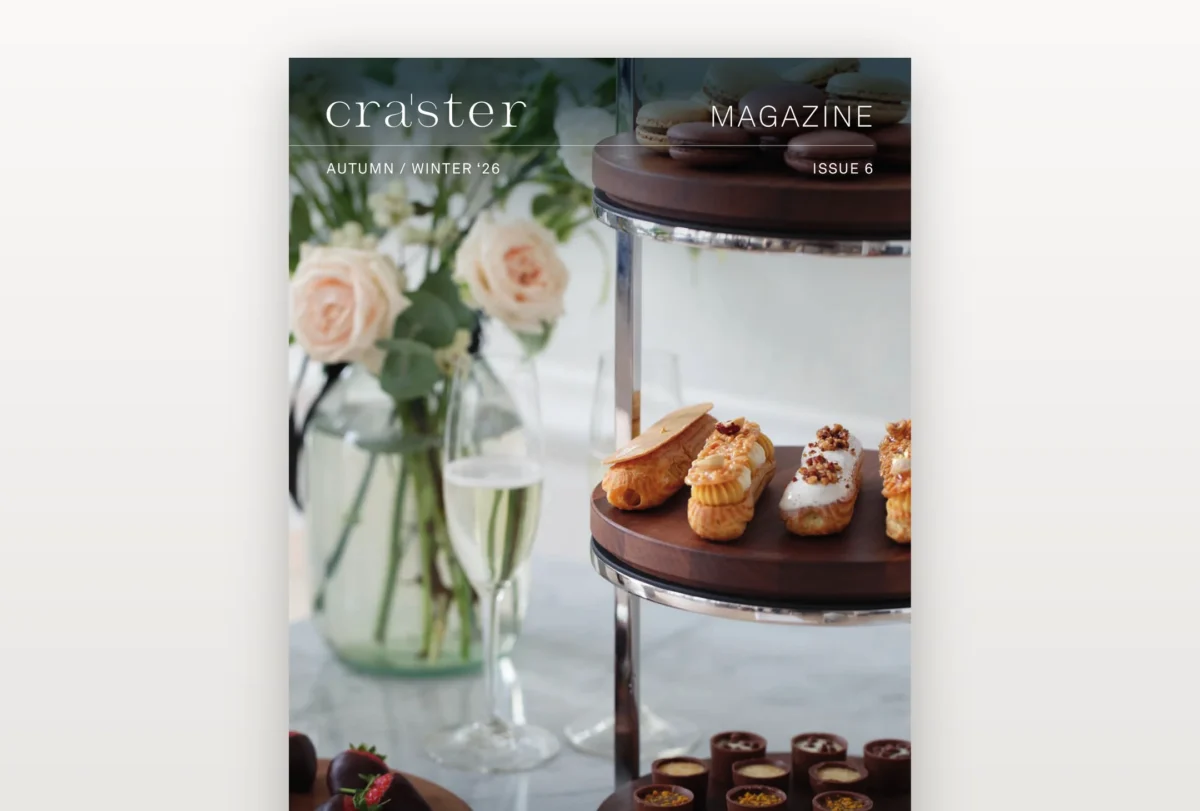
The new issue explores the work behind a great hospitality experience, from food held at temperature through a long service to spaces that earn throughout the day.
A great hospitality experience depends on work the guest rarely sees. In Issue 6 of the Craster Magazine, the chefs, operators and designers behind that work share what they have learned.
You Eat With Your Eyes: how a prestigious golf club now runs breakfast, lunch and afternoon tea from one buffet system.
Cold, By Design: Head of Design Geoff Marsh on the Tilt Beverage System, which keeps drinks cold for up to eight hours without ice.
The Next Layer of Flow: Product Designer Charlotte McGowan on Flow Cold Holding, which keeps food below 8°C for up to four hours.
Business Events, Reborn: why smaller, experience-led events are raising the bar for how hotels present themselves.
Space as an Asset: Global Account Director Daniel Alderson-Smith on turning F&B space from a cost into something that earns all day.
The Link Between Front and Back of House: Senior Account Manager Cliff Woods on the journey from kitchen to buffet.
Three Things, One Instinct: Chief Operating Officer Amy Myers on waste, real food and the human side of service.
You will also find Craster Spotted, our roundup of products in use around the world, plus the latest news from the team.
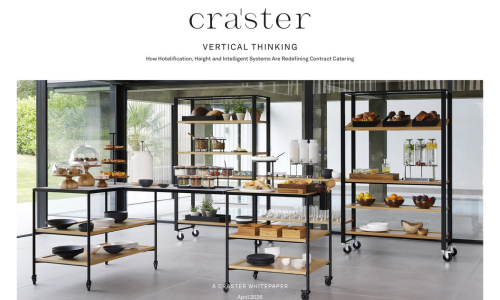
Contract catering is entering a transformative decade. Operators are embracing hotelification – delivering five-star experiences inside corporate headquarters and premium venues – and replacing linear buffets with vertical thinking: height and intelligent shelving that restore focal points, sightlines and flow at scale.
Through Signature Solutions, design-led standards scale across global portfolios, turning each hospitality moment into a disciplined brand asset.
Download The Whitepaper via the Form Below
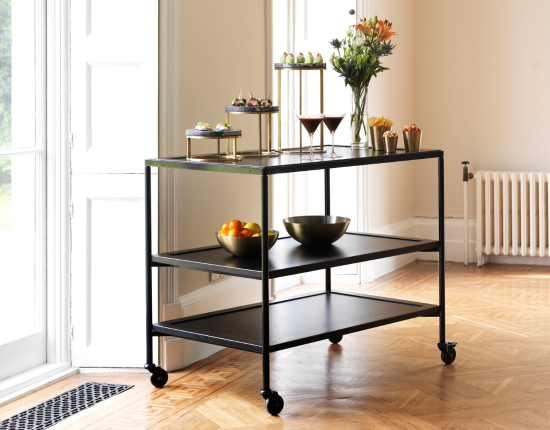
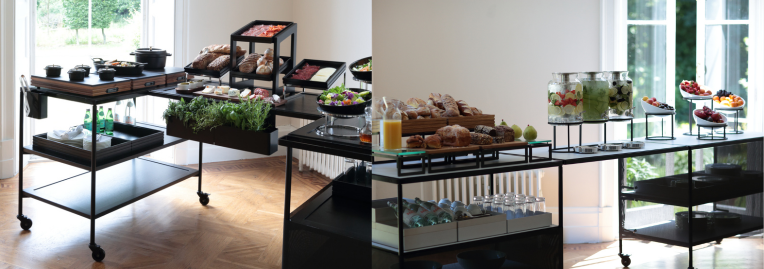
Fare is Craster’s modular trolley system for front-of-house service. Available in two sizes, four finishes and a growing range of accessories, it is designed to deliver theatre, flexibility and operational efficiency wherever service needs to happen — at the breakfast station, poolside, in a banqueting suite or behind a temporary bar.
Fare is available in two sizes: the 2.1 (compact) and the 3.1 (wider working surface). Both are built on a mild steel frame with castors and are available in four finishes: Oak, Walnut, Black, Reversible Black and White Marble Laminate.
Shelf load ratings: marble laminate up to 35 kg per shelf; timber and black finishes up to 25 kg (2.1) or 35 kg (3.1).
Two trolleys can connect via a Bridge — a surface panel that spans the gap to create a seamless, continuous worktop. Bridged configurations can be assembled, repositioned and rearranged by a single team member, adapting to different layouts without fixed installation. A paired 3.1 setup creates a working surface comparable to a permanent bar counter.
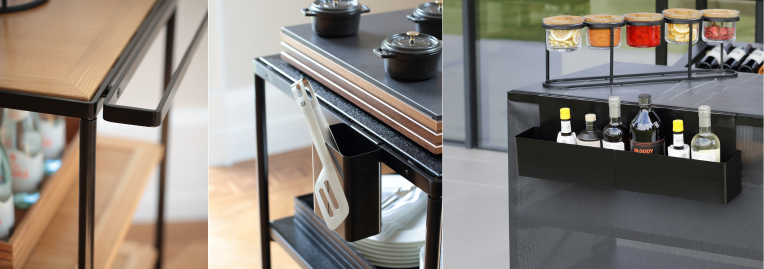
Three accessories connect directly into the Fare perimeter rail to extend FOH functionality:
• Speed Rail — holds tools, bottles and service cloths at the trolley face (max 10 kg)
• Push Handle — ergonomic grip for safe movement when fully loaded
• Cutlery Pot — mounts to the perimeter to keep cutlery and condiments accessible without using surface space (max 3 kg)
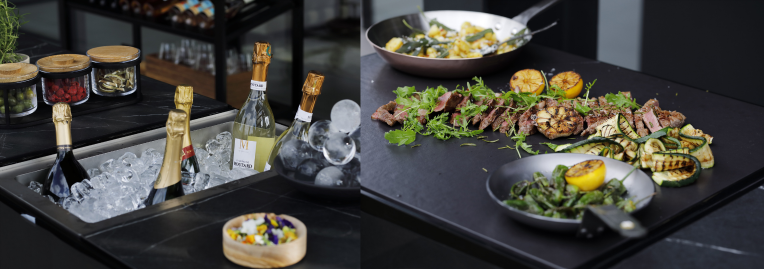
Fare integrates two purpose-built drop-ins that activate cold or hot service directly within the trolley surface.
The 1.1 Ice Well Drop-In is a stainless steel chilled well holding up to 39 litres, compatible with both the 2.1 and 3.1 trolleys. It comes with a laminate lid and requires a filler panel to complete the surface. One or two wells can be configured on the 3.1.
The 2.1 Hot Holding Drop-In uses a Dekton surface heated up to 140°C for consistent hot holding of plated dishes and GN inserts — no open flames, no bain-marie. For use with the 2.1 trolley only.
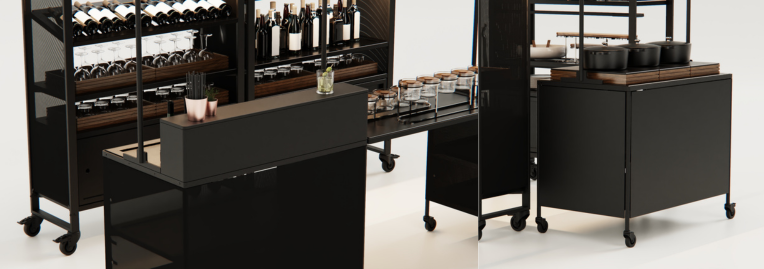
Two new accessories extend Fare into a complete, self-contained front-of-house destination. Full specifications are available shortly.
• Panel Set — hard laminate cladding panels that bring an architectural finish to the trolley frame, concealing service infrastructure and enabling brand customisation
• Bar Pass — a raised counter surface across the front of the 3.1 trolley with under-shelf storage, available in marble; defines the service interaction between team and guest
A 3.1 trolley with all accessories constitutes a fully resolved mobile bar — visual, atmospheric and repositionable.
• Breakfast — ice well for cold drinks, hot holding drop-in for pastries, Bridge for a unified counter; positions anywhere in the restaurant.
• Poolside and grab-and-go — the smooth rolling wheels allow the trolley to effortlessly navigate pool areas, delivering refreshments directly to your guests.
• 360-degree banqueting — high shelf load capacity and a clean aesthetic make Fare appropriate for service across large event floors, away from fixed counters.
• Live cooking and back bar — Bridge provides a defined preparation and presentation surface; Bar Pass introduces guest interaction and theatre at the station. Pair with Stak shelving units for the perfect setup.
• Corporate events (DDR) — Panel Set conceals service infrastructure between periods, allowing a breakfast setup to transition to a coffee break or evening reception without a full furniture reset.
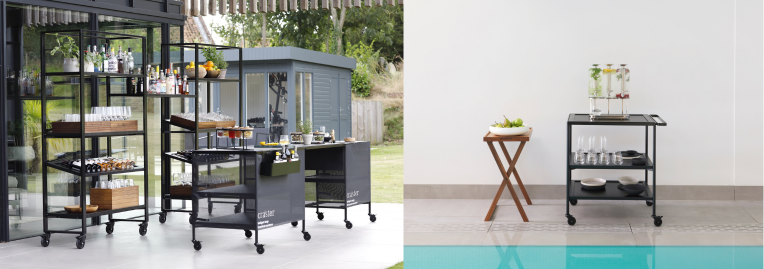
Fare works alongside the wider Craster system — linking with Stak for overhead structure and signage, and with Flow for GN-formatted display and temperature management. To explore how Fare might work within your space, contact the Craster team.
Clearer. Smarter. Built for Service.
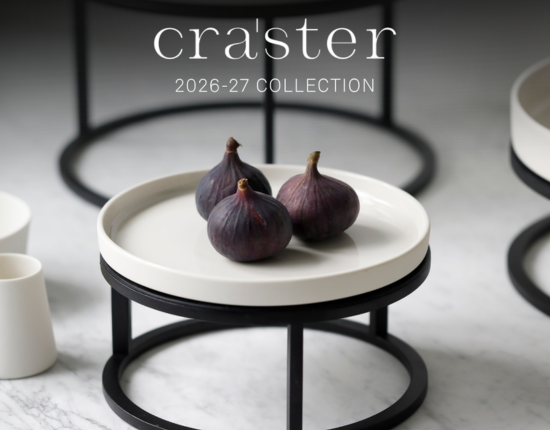
The Craster 2026–27 Catalogue brings together our most up-to-date front-of-house collection in a format designed to work harder for you.
Craster develops beautifully considered, intelligent front-of-house solutions that help teams shape spaces with clarity and confidence, allowing environments to be set up, refreshed, and adapted with ease.
Over the past 12 months, this approach has translated into a series of considered new launches, from countertop pieces such as the Tilt fine bone china Coupes and Linear Platters, to Solo additions, new two-tier Flow elevations, and significant progress across our Stak and Fare furniture ranges, now evolving into genuinely versatile platforms for multiple service setups.
This latest catalogue has been deliberately rethought to be clearer and more practical. With a stronger focus on product and configuration, and fewer lifestyle images, it’s designed to make finding the right solution quicker and more intuitive, so you can plan with confidence. The result is a working catalogue that prioritises clarity, flexibility and intelligent design.
The most considered hospitality environments are not built around individual products. They are built around systems: the quiet logic that connects platter to frame, frame to counter. This season, we have extended both the Tilt and Flow systems with additions that solve specific operational problems: how food is composed and presented, how beverage stations are organised, and how the tools of service keep pace with the quality of the display.
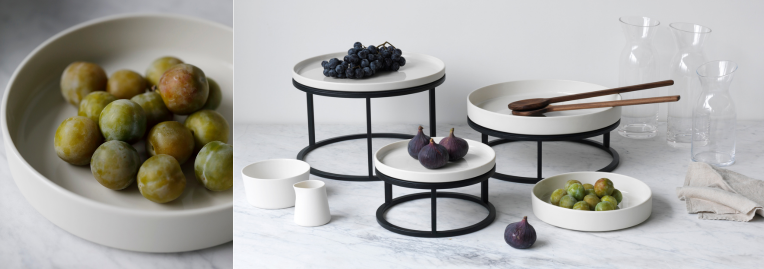
The Tilt system uses geometry to transform how food is seen and served. Its cylindrical frames create elevation and layering, giving displays a sense of depth and abundance. Tilt Linear extends that design language into a flat, structured plane that brings compositional order and clarity to multi-height layouts, giving operators a new tool for composed, architectural presentation.
Tilt Linear’s crisp angled rims guide the eye across a display without interrupting it. Flat surfaces foreground the food rather than the vessel. The result is a buffet that reads with the clarity of an interior: calm, modern and precise.
For operators, the practical case is equally considered. Linear Platters are fully compatible with all Tilt Standard and Large Frames, meaning an existing setup can be extended without replacing infrastructure. The glazed porcelain surface is dishwasher safe and stackable, supporting fast service turnover with less food handling.
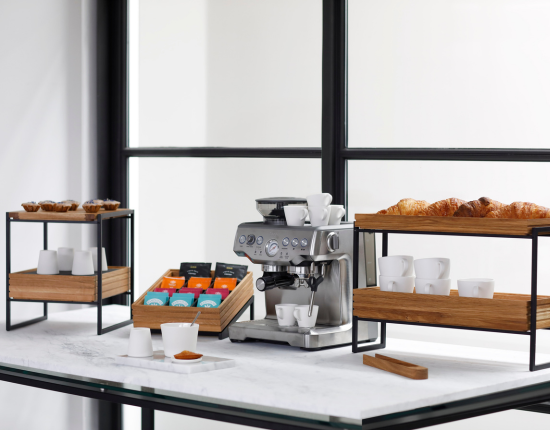
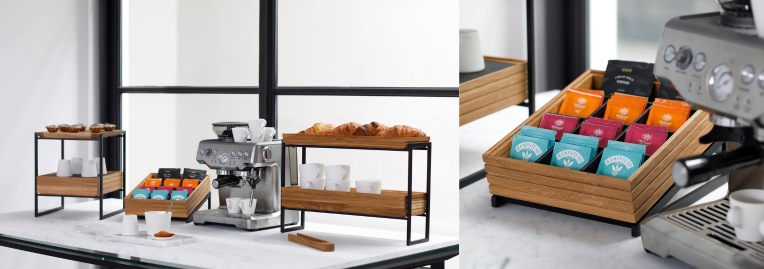
Flow Tiered Risers and Modular Dividers bring vertical control and spatial organisation to the Flow system. Tiered Risers (available in 1.2, 1.4 and 2.4 GN footprints) create hierarchy, elevating items to give any display rhythm, proportion and a sense of considered layering. Modular Dividers segment trays into configurable cavities, organising items so each has a defined place and replenishment remains straightforward.
At a coffee or beverage station — one of the most visited points on any breakfast or delegate dining layout — the combination works particularly well. Risers elevate cups and pastries to give the station clear hierarchy. Dividers keep sachets, stirrers and condiments organised so replenishment is planned rather than reactive. A station that might otherwise accumulate clutter instead communicates care and order.
Together, they allow beverage service to feel curated rather than assembled. Staff replenish with confidence. Guests navigate with ease. The station becomes a design feature rather than a functional afterthought.
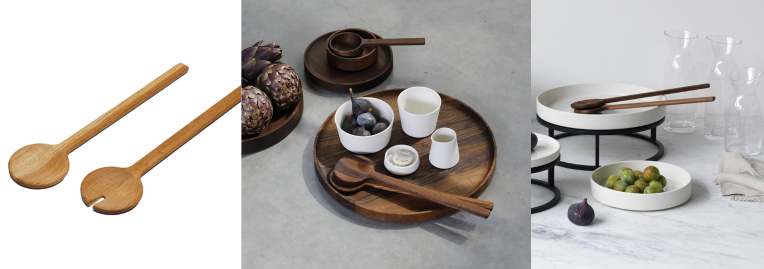
The quality of a display is only as consistent as the tools used within it. Most operations compromise at the point of service — reaching for bamboo or synthetic servers that sit at odds with the porcelain, brass or walnut of a considered Tilt setup. The Tilt Salad Servers close that gap.
Machined from solid walnut or oak and finished with natural sesame oil, the servers are food-safe, durable and proportioned to sit correctly alongside Tilt Coupe and Linear Platters. Subtle shaping and smooth return curves deliver an ergonomic grip without sacrificing the quiet elegance that the system demands.
What connects these three launches is the same principle that has always guided how we develop: every new addition must integrate with what already exists, extending capability without demanding replacement. Operators who have invested in Tilt or Flow can adopt any of these pieces immediately, without starting again.
For those specifying from the start, they offer a more complete picture of what a unified, operator-first buffet system looks like — from the architecture of the display down to the tool in the guest’s hand.
In-room dining is one of hospitality’s most intimate moments. Whether it’s breakfast in bed, a late-night supper, or a carefully timed business lunch between meetings, the experience unfolds entirely within the guest’s personal space. In those moments, every detail matters, and few elements are as central as the tray itself.
At Craster, trays are part of our DNA. In fact, trays were our very first product, and they continue to shape how we think about design, service, and the realities of hotel operations.
In 2009, our commitment to thoughtful tray design reached a defining moment when Craster was commissioned to create trays for the Royal Household. Among them was a white breakfast tray designed specifically for Her Majesty The Queen, created to support the quiet ritual of breakfast in bed. The brief demanded absolute precision and reinforced what we had always believed: that the simplest hospitality moments require the most considered design. That project remains a proud milestone in our history and continues to inform how we approach in-room dining today.
The principles applied then still guide our work now: trays that feel effortless to use, refined in appearance, and respectful of the experience they support.
The best hospitality products are often the least noticeable. A well-designed tray should never distract from the food, the service, or the setting. Instead, it should quietly support them.
In-room dining trays must balance multiple demands at once. They need to be lightweight enough for staff to handle comfortably, yet robust enough to carry full place settings. They must feel refined in a guest room while standing up to the repeated use, cleaning, and storage requirements of a busy hotel. And increasingly, they need to support contactless delivery without compromising presentation. Key considerations include weight distribution, grip points, stability on soft furnishings, and ease of storage. Integrated handles, carefully engineered folding legs, and balanced proportions are not aesthetic choices alone; they are practical decisions that make daily service smoother and safer for hotel teams.
By designing with operational flow in mind, trays can reduce strain for staff, speed up service, and ensure food arrives as intended: hot, intact, and well presented.
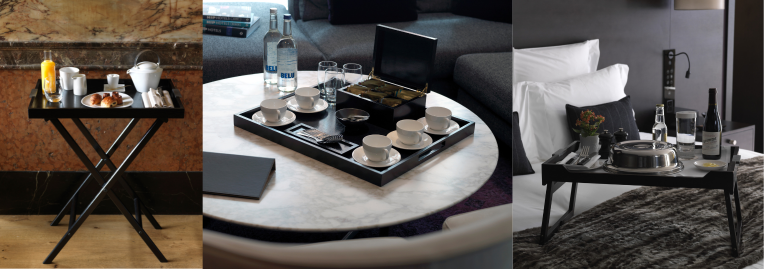
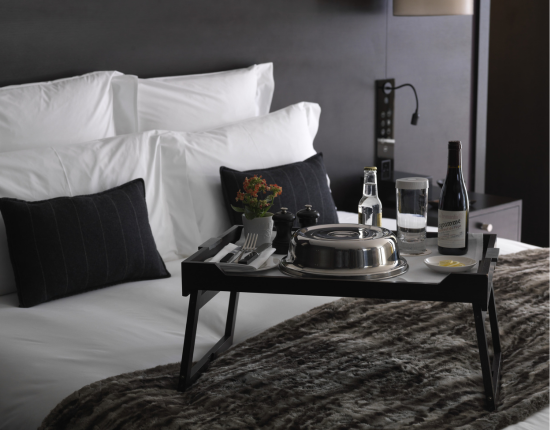
Breakfast in bed remains one of the most recognisable expressions of in-room dining. Yet delivering it well is deceptively complex. Trays must be stable on mattresses, large enough for multiple items, and easy to manoeuvre through corridors and doorways.
Our breakfast trays with folding legs offer a refined solution. When opened, they provide a secure platform for service; when closed, they store neatly and efficiently. Details such as integrated handles and lowered sides contribute to a sense of ease, both for the guest enjoying the experience and the staff delivering it. It is this attention to detail that elevates a familiar ritual into something memorable.
By focusing on how products are truly used, and respecting the realities of hotel operations, we create tray solutions that enhance in-room dining without ever demanding attention.
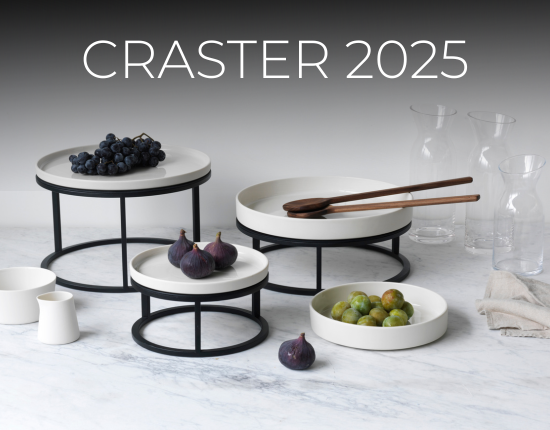
As 2025 draws to a close, we’re taking a moment to reflect on a year that has shaped Craster in meaningful and lasting ways. What began with bold ambitions has unfolded into one of our most dynamic and creatively fulfilling years yet—defined by new products, new partnerships, and renewed commitment to the craft and culture that drive our work.
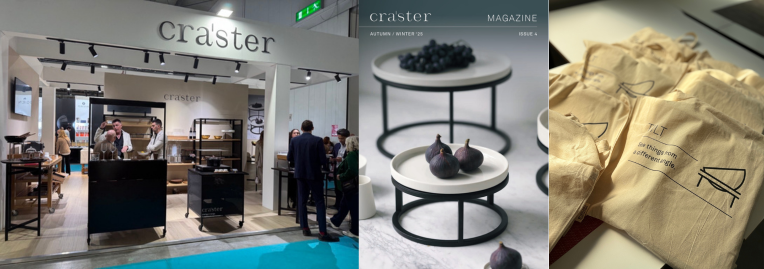
Craster’s presence across the international hospitality landscape grew significantly in 2025. This year, our teams travelled across key regions to participate in some of the industry’s most influential events- including NRA in Chicago, Catering Platform in London, Fine Food Australia in Melbourne, Sirha Arabia in Riyadh, HOST in Milan, and To The Table MEA in Ras Al Khaimah, as well as a special showcase at the W Prague launch.
Each event gave us a unique platform to engage with chefs, operators, hoteliers, and designers, allowing us to demonstrate how our product ranges continue to evolve in response to global trends. Whether discussing breakfast solutions in the Middle East, modular buffet displays in Europe, or back-of-house operational needs in North America, these conversations sharpened our understanding of the diverse challenges our clients face—and how Craster can meet them.
Our stands this year were intentionally designed to feel immersive and intuitive, enabling visitors to walk through our collections as they would a hospitality space. The positive feedback from clients and partners reinforced the importance of design-led storytelling and reaffirmed Craster’s role as a thought leader in premium hospitality solutions.
2025 marked a decisive step forward in strengthening our core systems. This year, we introduced two key additions to the Craster portfolio: new Tilt wooden bowls and plat